Swimming
Tail beat frequency
Indicator of swimming activity and energetic demand
What the evidence says
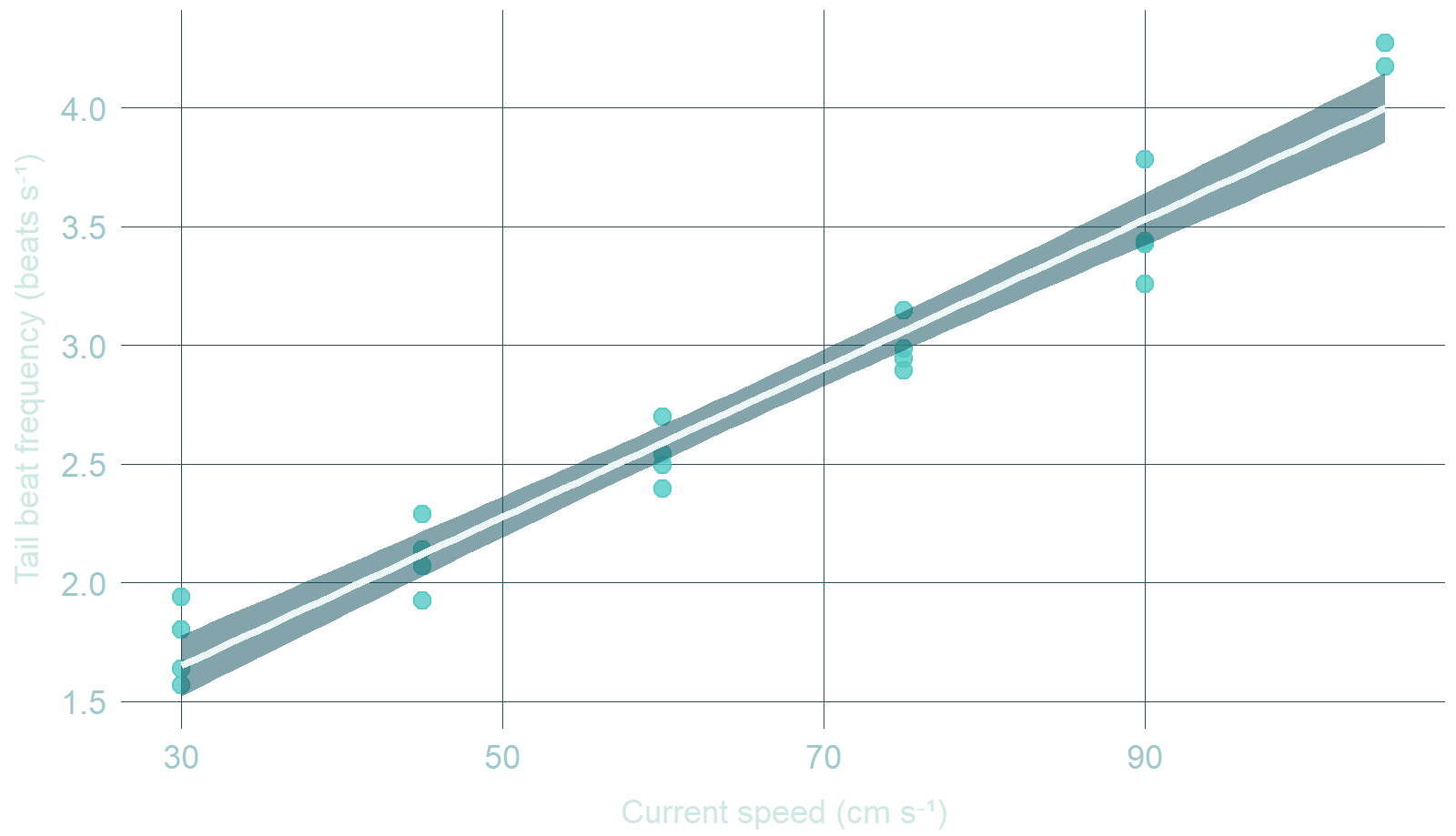
Increases linearly with swimming speed through the sustained aerobic range.
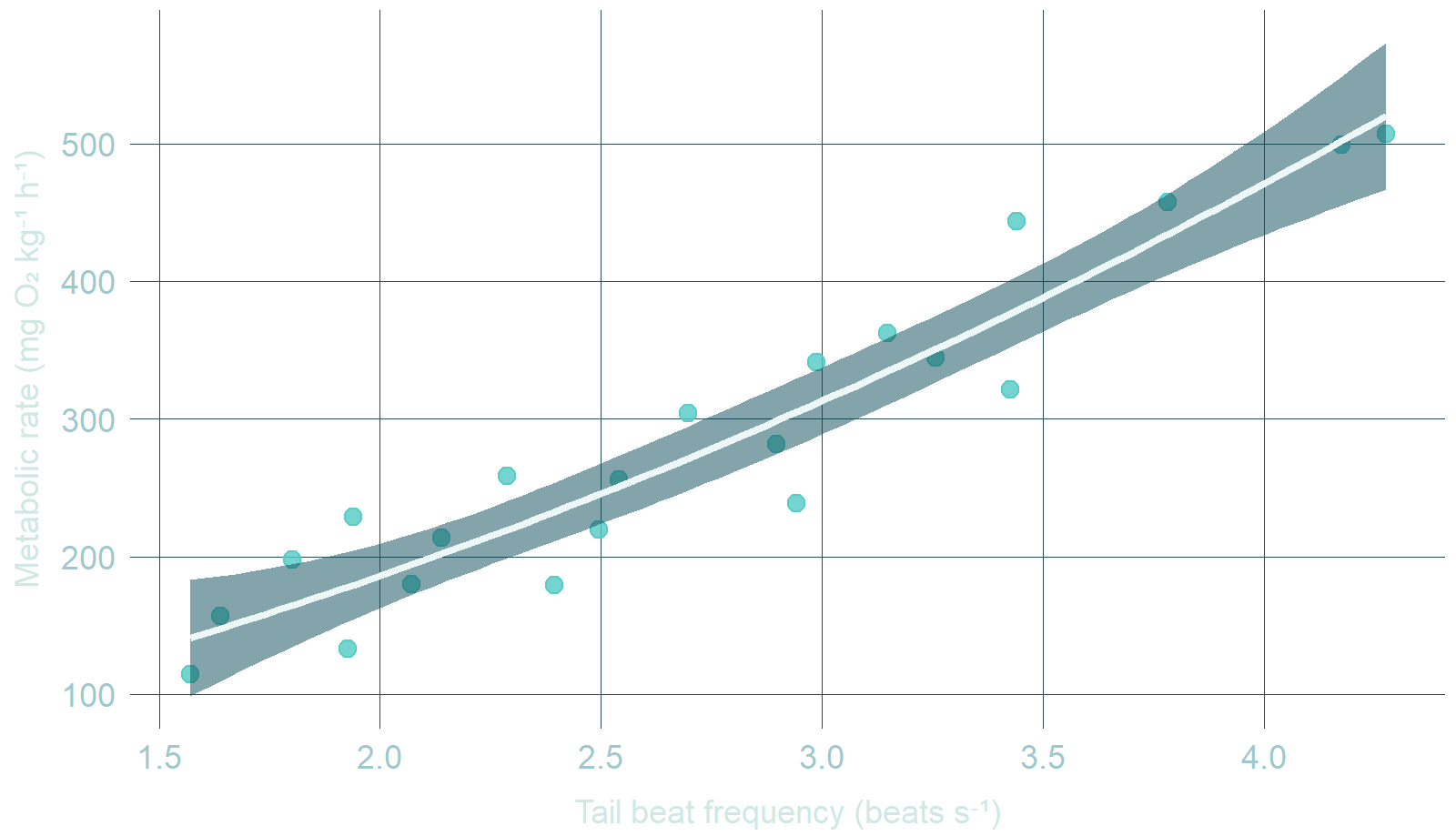
Strong correlation between tail beat frequency and metabolic rate.
At high speeds, both tail beat frequency and amplitude increase to increase thrust.
How to score the indicator
Scoring guidelines
- The rate at which the caudal fin oscillates from side to side, expressed as tail beats per second (Hz).
- One tail beat is defined as the caudal fin crossing the mid-line of the fish twice.
- Counting only occurs when the mid-line and caudal fin are clearly visible.
- Optimally observed using an upward or downward facing camera.
- Reduced playback speed (0.5x) improves the accuracy of manual counts.
Scoring example
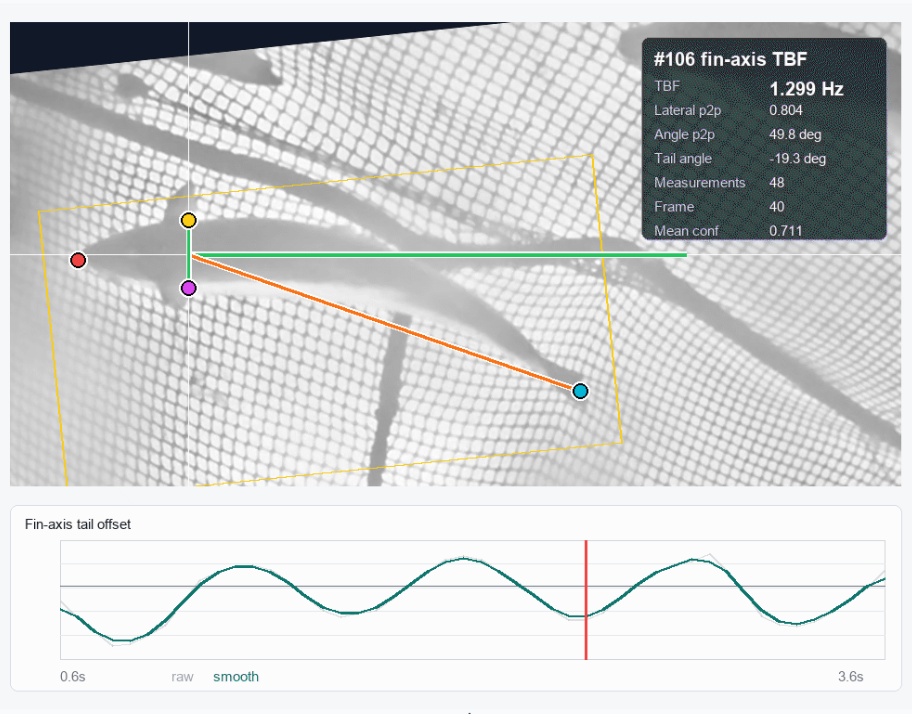
Video library
Interpretation
- Metabolic oxygen demand increases with increasing tail beat frequency.
Modulating factors
Current speed ▲ Increases frequency
Tail beat frequency increases when fish swim against faster currents.
Temperature ▲ Increases frequency
Maximum achievable tail beat frequency is higher in warmer temperatures. 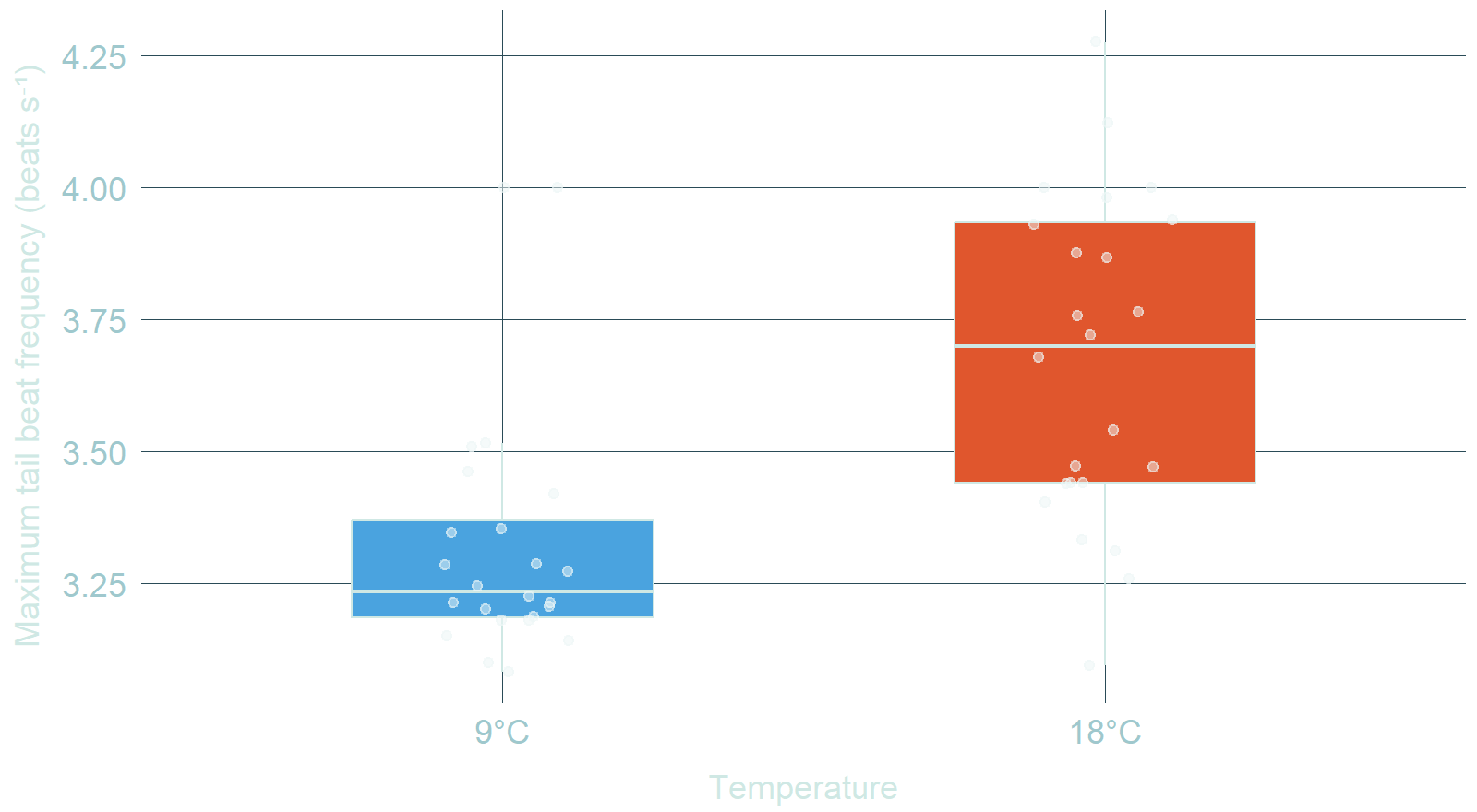
Fed status ◆ No effect
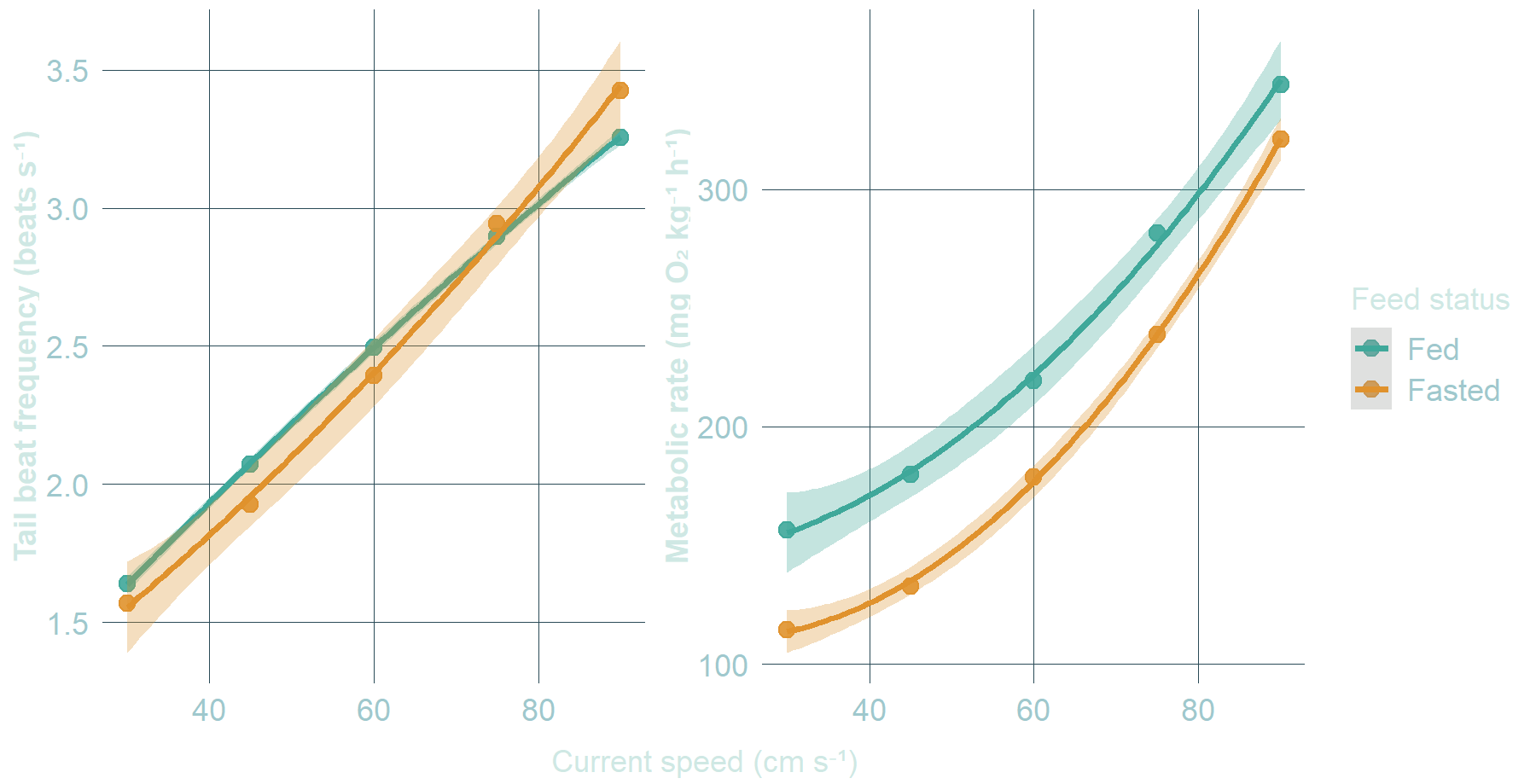
Fed and fasted fish show the same tail beat frequency across current speeds, but fasted fish have lower metabolic rates throughout.
What remains unknown
- Characterization of the tail beat frequency versus amplitude trade-off
- Determination of baseline tail beat frequencies for fish of varying size across the range of current speeds experienced in commercial net pens
- Examination of the relationship between maximum tail beat frequency and temperature for fish of different sizes
Selected references
Hvas, Malthe. 2022. “Swimming Energetics of Atlantic Salmon in Relation to Extended Fasting at Different Temperatures.” Conservation Physiology 10 (1): coac037. https://doi.org/10.1093/conphys/coac037.