Swimming
Swim tilt
Indicator of buoyancy and the effort required to maintain position in the water.
What the evidence says
When the swim bladder loses gas, salmon become negatively buoyant.
Tilt increases progressively as buoyancy declines.
Increasing body angle redirects part of propulsive force upward and can increase hydrodynamic lift.
Sustained tilted swimming may increase the risk of vertebral deformities.
Salmon can return to neutral buoyancy within hours if given access to the surface.
Salmon target strength in hydroacoustic observations decreases with increased tilt and reduction of gas in the swim bladder.
How to score the indicator
Scoring guidelines
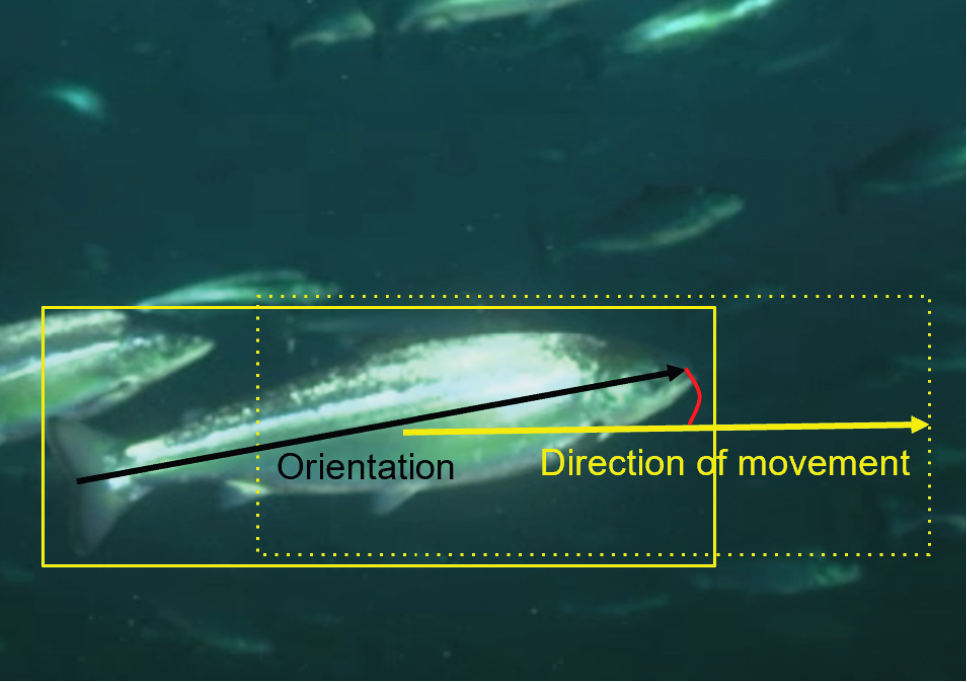
- Swim tilt is the angle of a salmon’s body relative to the direction of movement.
- Scored only when the entire fish is visible, from snout to caudal fin.
- Expressed as an angle in degrees
- approximately 0° = horizontal swimming
- positive angle = head-up/tail-down
- negative angle = head-down/tail-up
Classification examples
Interpretation
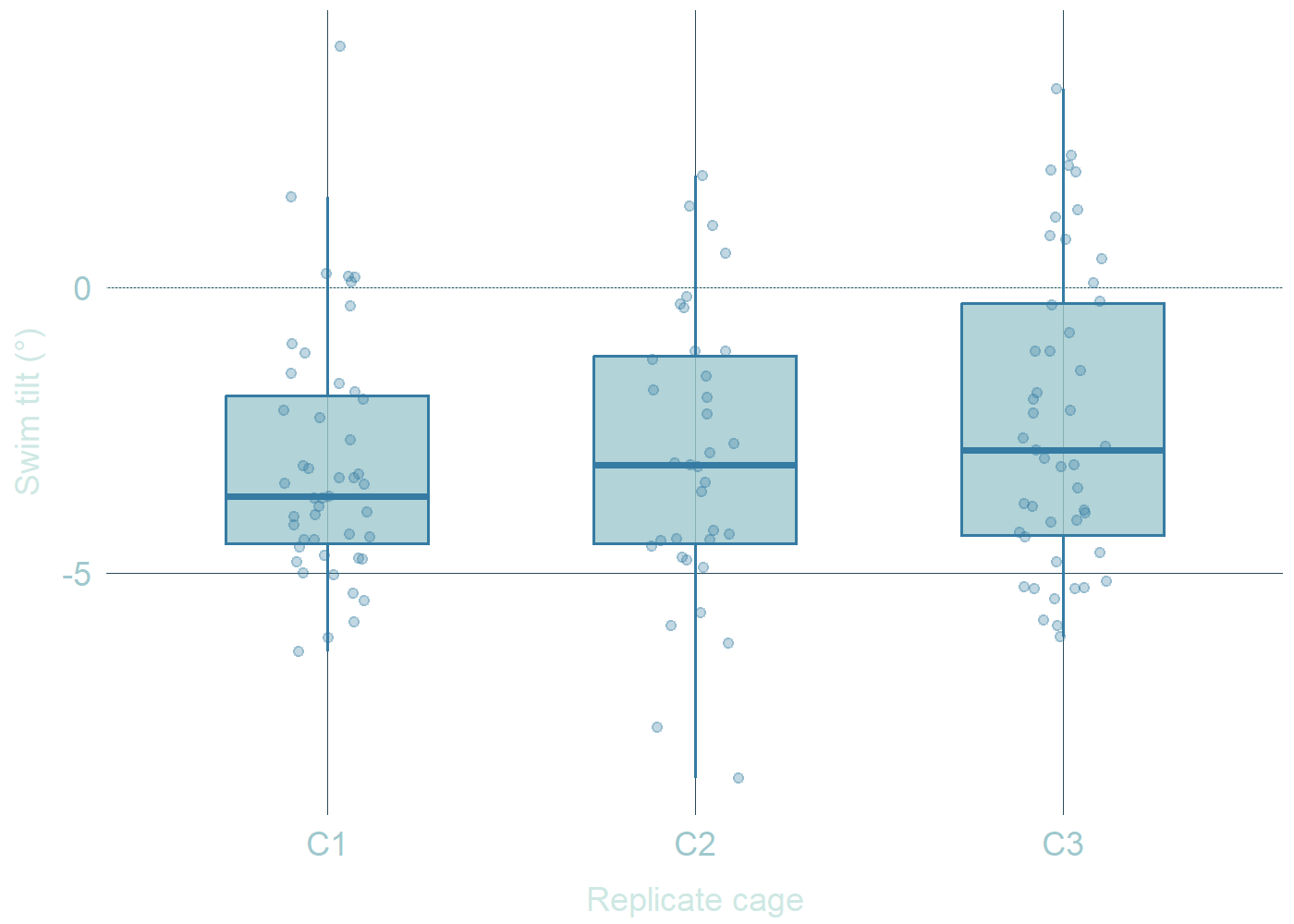
Swim tilt angle varies in healthy salmon with short-term changes in swim bladder fullness, swimming depth, time of day and season. The full extent of the natural variability is not well characterized, but in a short-term trial with ~2 kg salmon tilt ranged from -6.5 to 6.0 degrees.
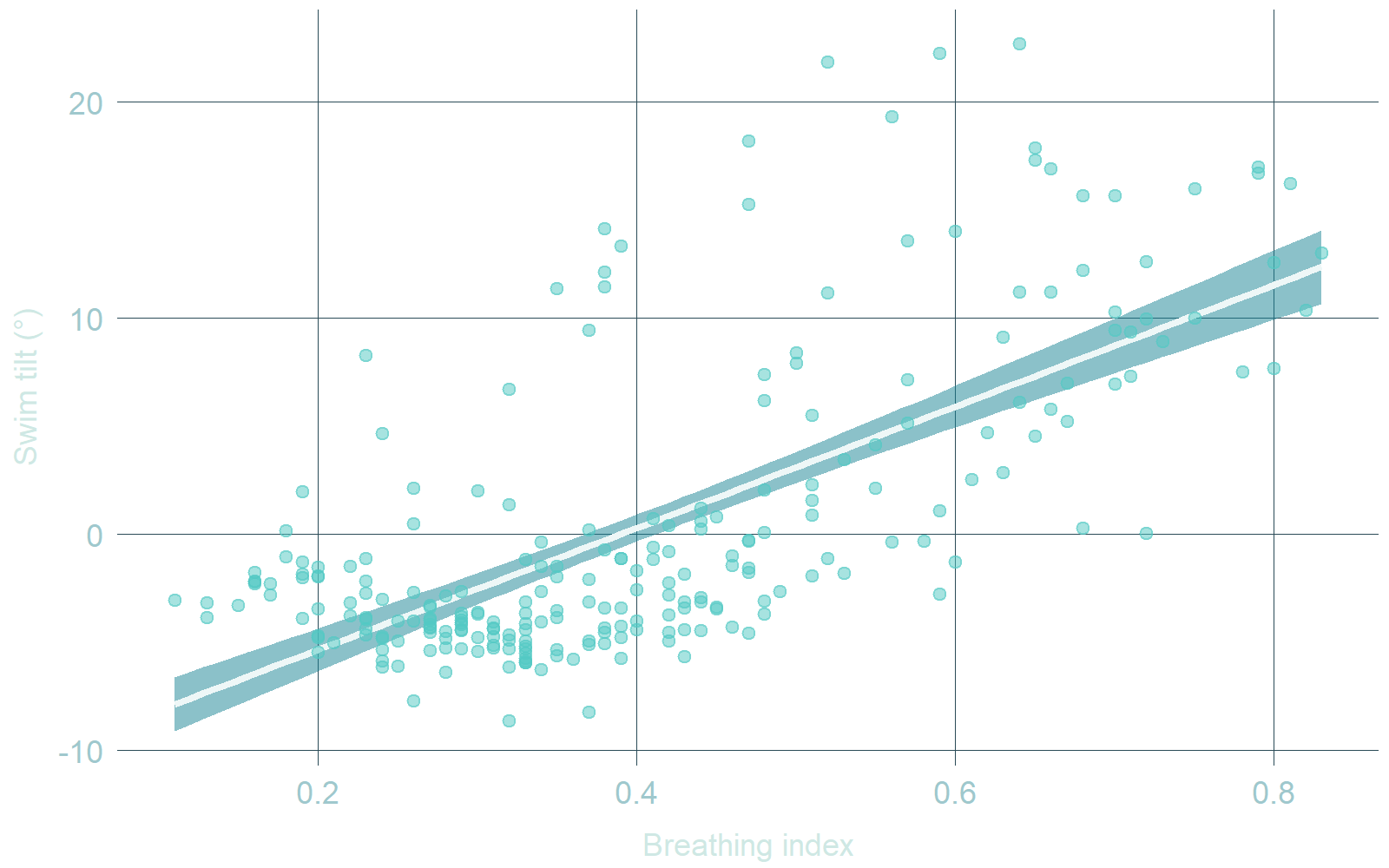
Consistent tilted swimming is a compensatory mechanism for fish which are not neutrally buoyant.The increased energetic demand of tilted swimming is detectable in respiratory effort, with breathing index increasing progressively with swim tilt.
Modulating factors
Air access ▲ Increases tilt
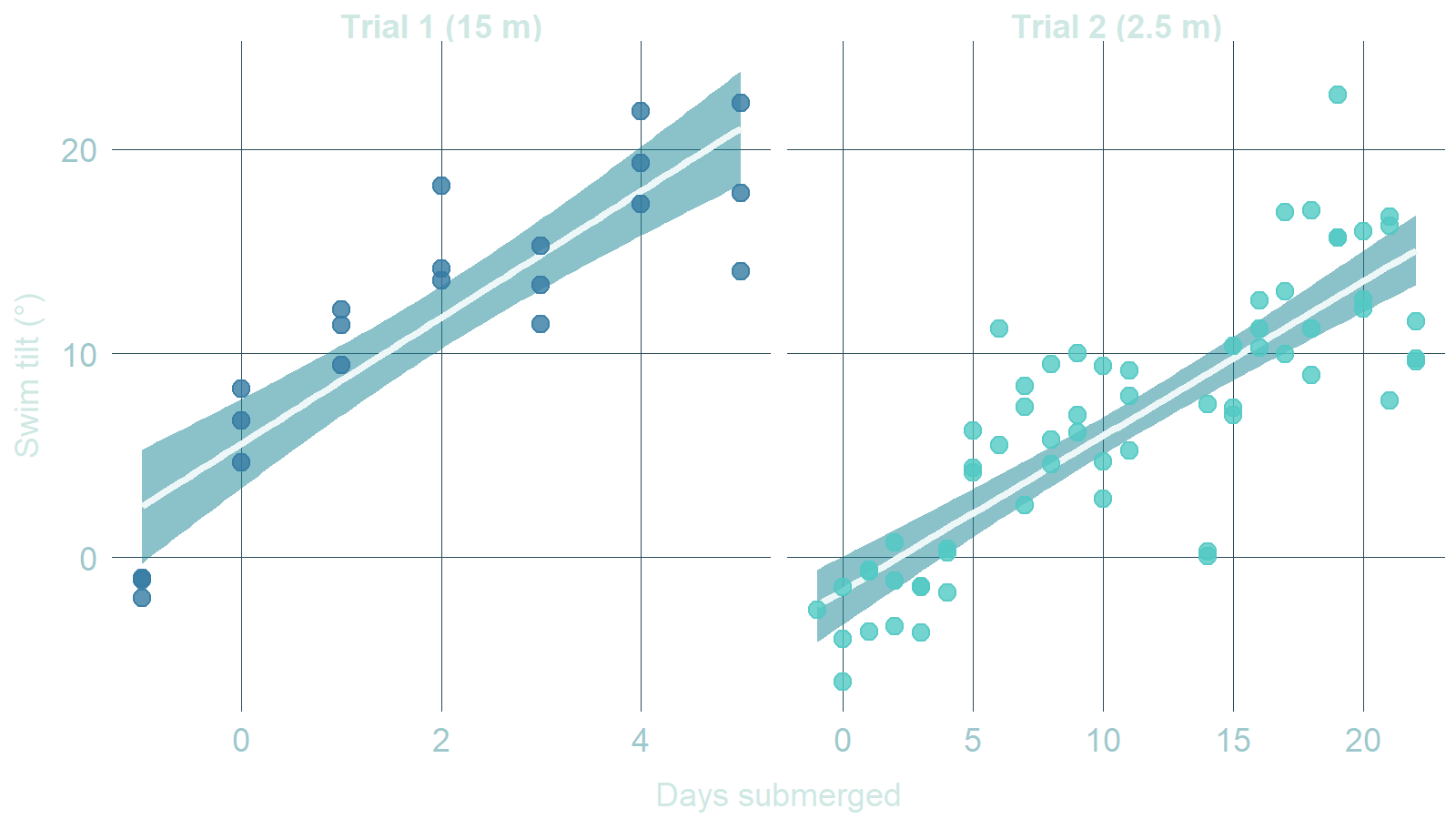
Swim tilt progressively increases during periods without air access.
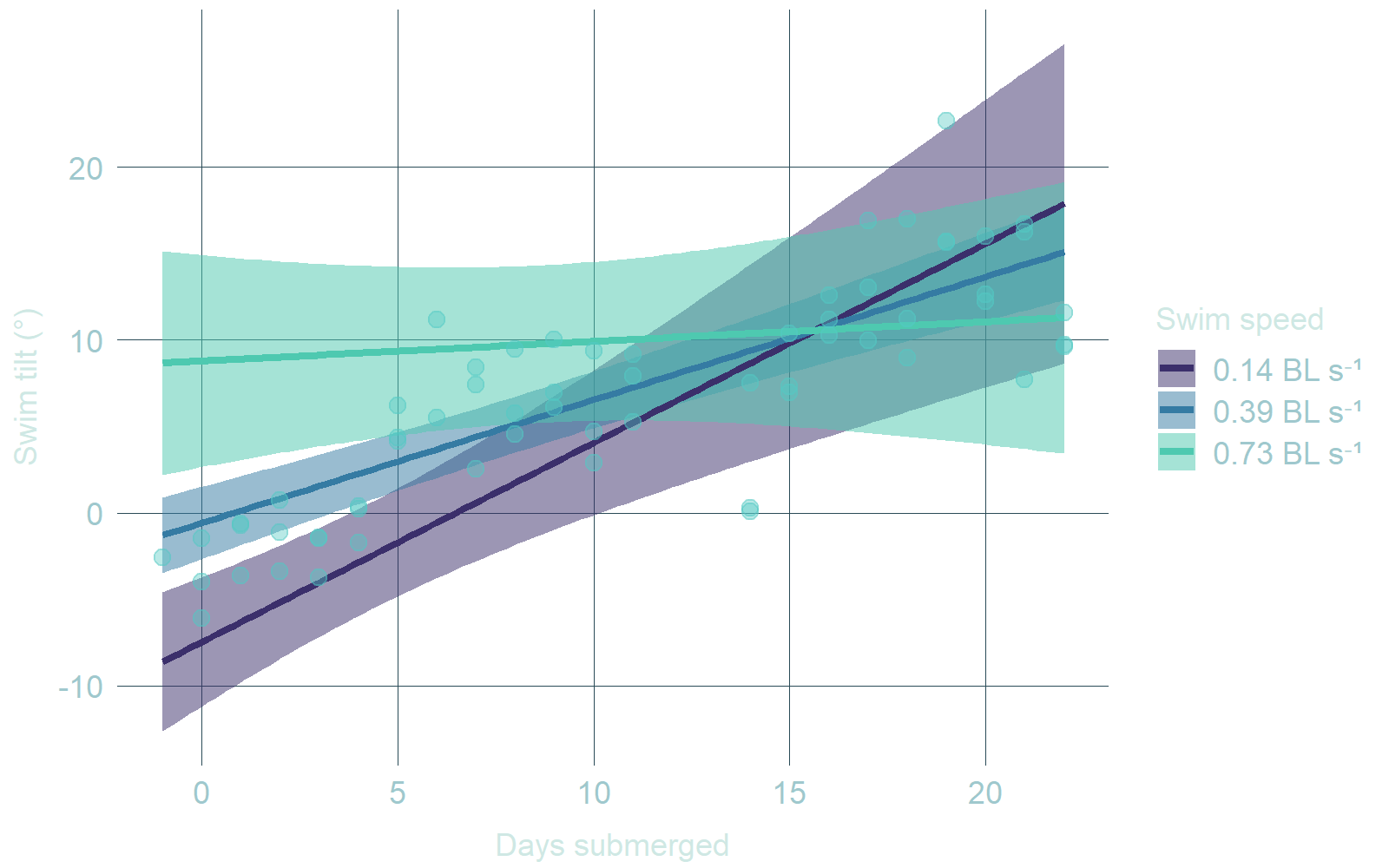
Swimming speed ▼ Decreases tilt
Slower swimming fish develop a tilted head-up posture before faster swimming fish.
Submergence condition ◆ Condition dependent
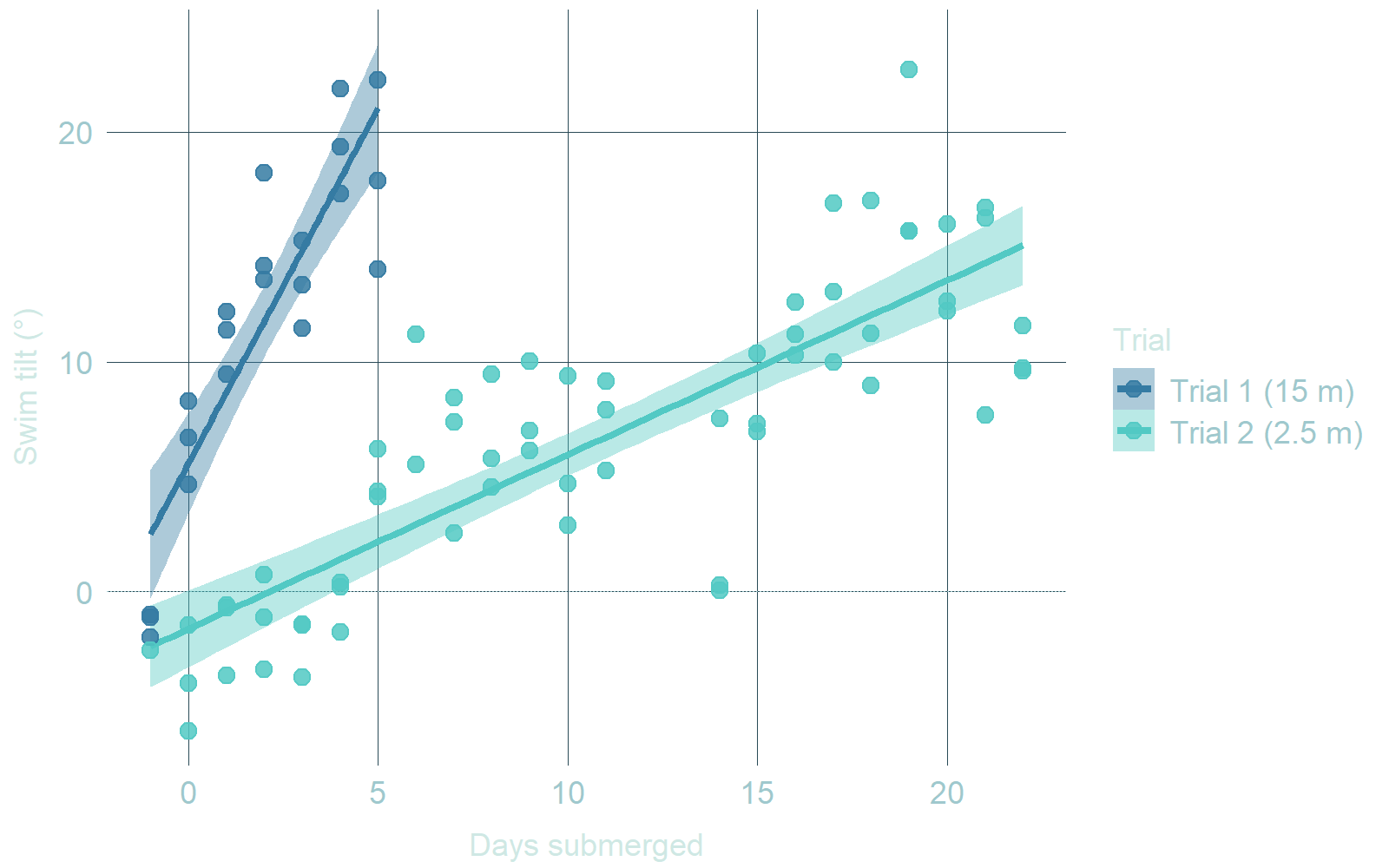
Head-up tilted swimming posture is detectable within hours if fish are denied air access during or immediately after submergence (Trial 1). If air access is lost during submergence, tilted swimming posture develops more gradually (Trial 2).
What remains unknown
- Baseline distribution of swim tilt in healthy salmon of different sizes.
- Natural variability in swim tilt in relation to seasonal and environmental fluctuations.
- Impact of tilted swimming posture on cost of transport and swimming capacity.